
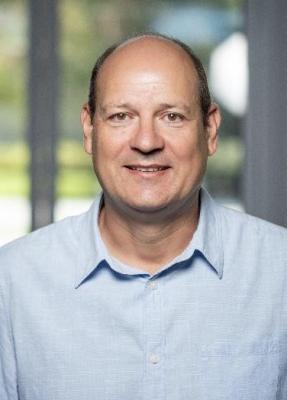
 Professor Yiorgos Makris joined ECE as a Full Professor in July 2025. While Prof. Makris is new to ECE, he is not new to UC San Diego; he obtained his Ph.D. from UC San Diego CSE in 2001. He spent a decade on the faculty of EECS at Yale University and 14 years as a faculty member of ECE at the University of Texas at Dallas, before returning to UC San Diego. Prof. Makris is a Co-founder of the NSF Industry/University Cooperative Research Center on Hardware and Embedded-System Security and Trust (CHEST) and serves as the Associate Director for digital twin research of the Texas Analog Center of Excellence (TxACE). At UC San Diego, he is directing the Trusted and Reliable Architectures (TRELA) Laboratory. Prof. Makris is a Class of 2025 IEEE Fellow for contributions to machine-learning-based design of trusted and reliable integrated circuits.
Research Area
Prof. Makris’ research group is known for pioneering and championing the use of artificial intelligence and machine learning (AI/ML) in the areas of semiconductor design, manufacturing, and testing more than 20 years ago, at a time when AI/ML was thought of as a thing of the past. His work leverages domain-specific expertise, digital twin technology, and the power of data to develop industrially relevant solutions for optimizing quality, reliability, security, and trust of integrated circuits and systems.
Some of his recent projects include:
- Analog/RF IC Test & Calibration – leveraging correlations between circuit analog/RF IC performances to reduce the cost of manufacturing defect identification and the complexity of post-manufacturing trimming for specification compliance.
- Statistical Side-Channel Fingerprinting – analyzing the parametric space of integrated circuits to prove their integrity, authenticity and trustworthiness.
- Covert Wireless Communication – investigating hardware-based methods for establishing clandestine channels within existing communication protocols, as well as information theoretic and circuit-level methods for detecting/preventing such channels.
- Trusted Synthetic Biology – porting concepts from the semiconductor industry to genetic engineering to facilitate cell-line identification and IP protection.
Prof. Makris collaborates closely with the semiconductor industry and is particularly keen on demonstrating industrial relevance of his solutions through the use of actual production data and custom-designed integrated circuits.
Recent Highlights
Prof. Makris has been developing provenance attestation and supply chain traceability solutions for the semiconductor industry. Specifically, using AI/ML methods alongside physical and electrical test measurements obtained during silicon manufacturing or data from custom-designed sensors, his solutions seek to certify the manufacturing facility, mask-set, and actual equipment used to fabricate wafers. The objective is to provide provable guarantees that instill trust in the electronic supply chain and confidence in the applications where integrated circuits are deployed.
Another ongoing effort focuses on the development of a novel transistor-level programmable fabric (TRAP), which seeks to support hardware intellectual property (IP) by enabling cost-effective integrated circuit (IC) redaction and in-field updating. The latest version of this fabric, TRAPv4, achieves up to 20x area savings and 2x to 3x higher operating frequencies than contemporary Embedded Field Programmable Gate Arrays (eFPGAs), while offering superior efficiency and scalability. With applications in both commercial and defense domains, TRAPv4 delivers a transformative solution for secure and cost-effective hardware design.
Message to the Community
“Returning to my alma mater 30 years after I first set foot on the UC San Diego campus as an aspiring Ph.D. student is a dream come true. My academic career journey through Yale University and the University of Texas at Dallas has been adventurous and full of experiences. In the next chapter of this journey, I am looking forward to sharing these experiences with colleagues and students, establishing partnerships with the semiconductor manufacturing and defense industrial base ecosystem in Southern California, and exploring collaborative opportunities toward ensuring safe, reliable, secure, and trusted operation of electronic circuits.”