
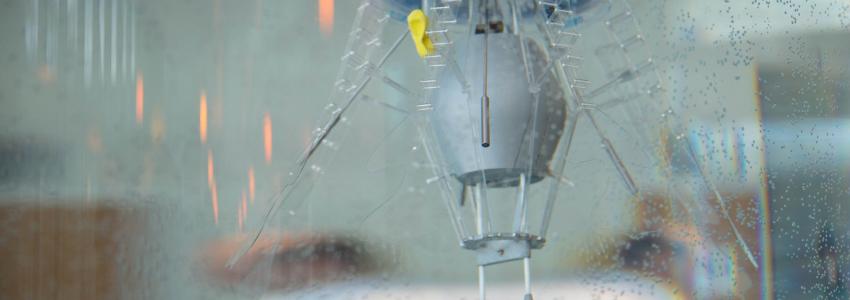
Research in Intelligent Systems, Robotics & Control at UC San Diego addresses the fundamental challenge of building systems that can sense, reason, decide, and act reliably in complex and uncertain environments. The group draws on control theory, optimization, probability, and machine learning — applying these tools to physical systems where safety, correctness, and adaptability are non-negotiable.
A central theme is the tight integration of learning and control. Faculty here develop theory and algorithms that preserve formal guarantees — stability, convergence, constraint satisfaction — while enabling systems to adapt from data. This spans stability-constrained reinforcement learning, neural operator methods for PDE-governed systems, model-free optimization-based algorithms, and hybrid dynamical systems frameworks that unify continuous adaptation with discrete decision-making.
On the robotics side, the ISRC faculty covers the full autonomy stack from perception to planning to physical execution. Research areas include probabilistic SLAM and active information gathering for mobile robots operating without pre-built maps, autonomous surgical robotics and image-guided intervention, and embodied AI for generalizable dexterous manipulation and humanoid robot control. More generally across intelligent systems, the ISRC faculty work on intelligent control of large-scale networked systems — including power grids, smart buildings, and transportation networks — as well as the game-theoretic foundations of multi-agent decision-making and the ethics of deployed AI systems.
Several faculty and labs are affiliated with the Contextual Robotics Institute (CRI), the Halıcıoğlu Data Science Institute (HDSI), the Center for Energy Research, and the Center for Control, Systems, and Dynamics (CCSD).
A central theme is the tight integration of learning and control. Faculty here develop theory and algorithms that preserve formal guarantees — stability, convergence, constraint satisfaction — while enabling systems to adapt from data. This spans stability-constrained reinforcement learning, neural operator methods for PDE-governed systems, model-free optimization-based algorithms, and hybrid dynamical systems frameworks that unify continuous adaptation with discrete decision-making.
On the robotics side, the ISRC faculty covers the full autonomy stack from perception to planning to physical execution. Research areas include probabilistic SLAM and active information gathering for mobile robots operating without pre-built maps, autonomous surgical robotics and image-guided intervention, and embodied AI for generalizable dexterous manipulation and humanoid robot control. More generally across intelligent systems, the ISRC faculty work on intelligent control of large-scale networked systems — including power grids, smart buildings, and transportation networks — as well as the game-theoretic foundations of multi-agent decision-making and the ethics of deployed AI systems.
Several faculty and labs are affiliated with the Contextual Robotics Institute (CRI), the Halıcıoğlu Data Science Institute (HDSI), the Center for Energy Research, and the Center for Control, Systems, and Dynamics (CCSD).
Faculty
Nicholas A. Antipa
Assistant Professor
Nikolay A. Atanasov
Professor
Dinesh Bharadia
Associate Professor
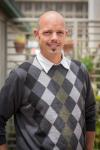
Massimo Franceschetti
Professor
858-822-2284
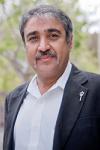
Pradeep K. Khosla
Chancellor, UC San Diego
Distinguished Professor
858-534-3135
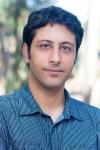
Siavash Mirarab (Mir arabbaygi)
Professor
858-822-6245
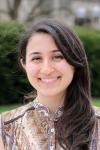
Parinaz Naghizadeh
Assistant Professor
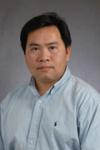
Truong Nguyen
Distinguished Professor
858-822-5554
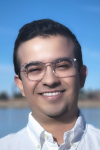
Jorge Poveda
Associate Professor
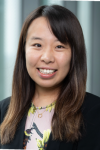
Yuanyuan Shi
Assistant Professor

Nuno M. Vasconcelos
Professor
858-534-5550

Jun-Kun Wang
Assistant Professor

Xiaolong Wang
Associate Professor

Pengtao Xie
Associate Professor
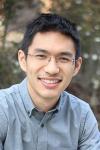
Michael Yip
Professor
858-822-4778
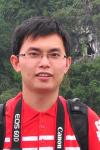
Yang Zheng
Assistant Professor
Adjunct Faculty
Cheolhong An
Assistant Adjunct Professor
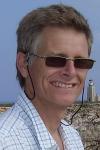
Peter Gerstoft
Adjunct Professor
858-534-7768
Affiliated Faculty
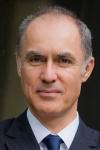
Miroslav Krstic
Affiliate Faculty from the Department of Mechanical and Aerospace Engineering
858-822-1374
Emeritus Faculty
Clark C. Guest
Associate Professor Emeritus
858-534-6549

Ramesh C. Jain
Professor Emeritus
858-534-6395